Skip to content
  • Home
  • Biography
  • Photography
  • Archive
  • Instagram
  • VI
Tran Dinh Thuc Doan

October 29, 2022 Archive, Documentaries
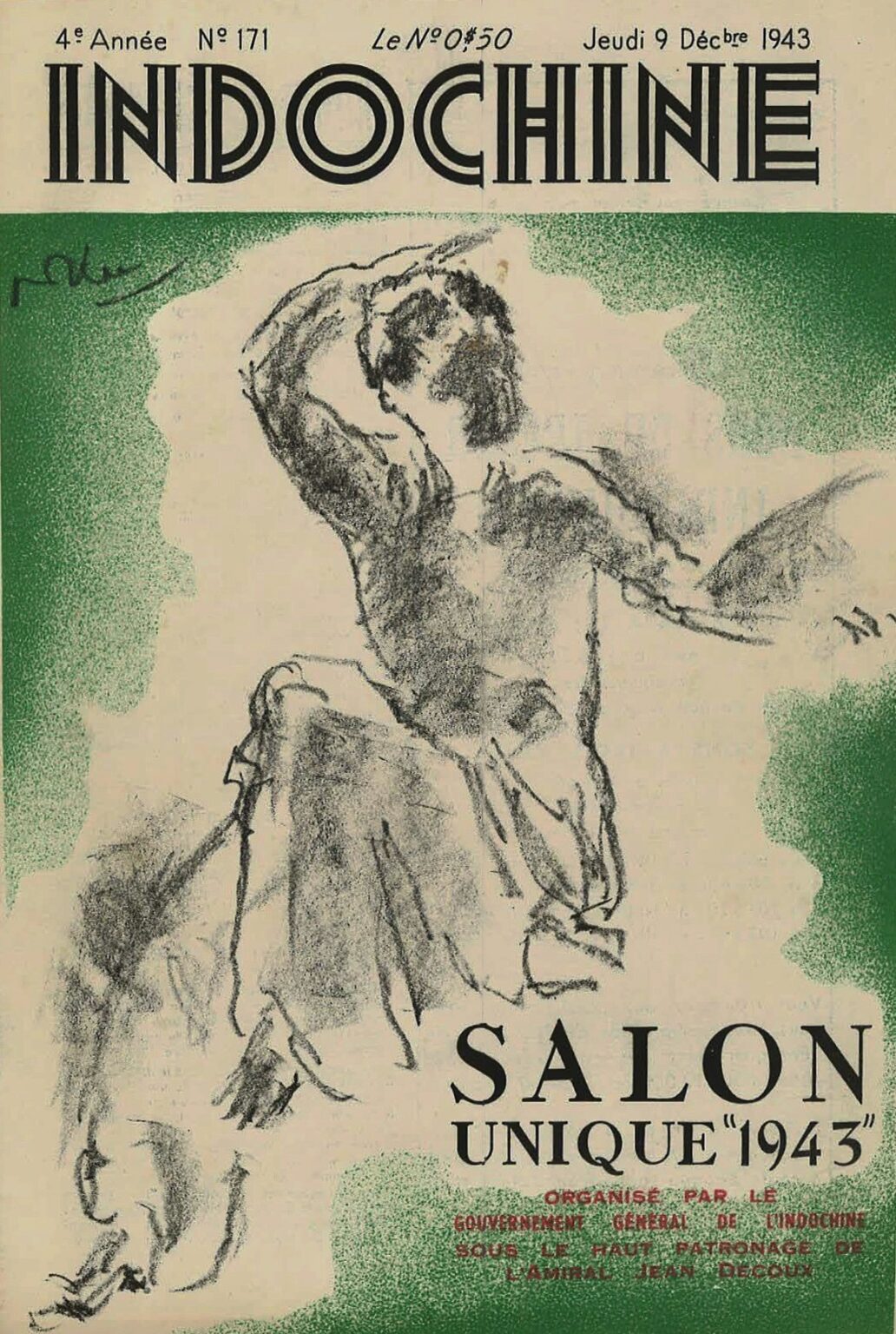
In Hanoi in 1943, Nguyen Gia Tri met a highly regarded art critic, Claude Manoudeau, during the Salon Unique where the top artists of the time were selected to exhibit. The review of the exhibition by Claude Mahoudeau captured the strong impression that Nguyen Gia Tri made: “Here at the front of the room are the lacquers of Mr Nguyen-Gia-Tri.” 

We have the good fortune to come across a passage written by the Goncourt brothers that could well have been for these lacquers: “He has redefined grace…, this grace is the little something that clothes a woman of charm, of coquetry, of a beauty beyond physical beauty. This grace is a subtlety that resembles the smile of a line, the soul of a form, the spirituality of an object. All the seductions of the female at ease, the langour, the idleness, the strut, the lengthening, the nonchalance, the cadence of the poses, the suppleness of the feminine body and the play of the slender fingers on the grip of the fans.”

There is nothing left to do but admire the creations of an artist whose contribution to this exhibition is considerable. The artist’s works dazzled everyone. Claude Mahoudeau and Nguyen Gia Trí’s friendship continued to blossom. The relationship deepens in companionship.

Indochine, Salon Unique 1943, Issue No. 171, 9 October 1943, featuring a drawing by Nguyen Tuong Lan (Vietnam, 1906-1946) on the cover page.
The Aymé family at their home in Dole, Jura, 1931.

Top left: General Aymé; top right: Marcel Aymé; centre left: Michel, Marcel Aymé’s son; centre right: Marcel Aymé’s wife; seated: Alix Aymé.

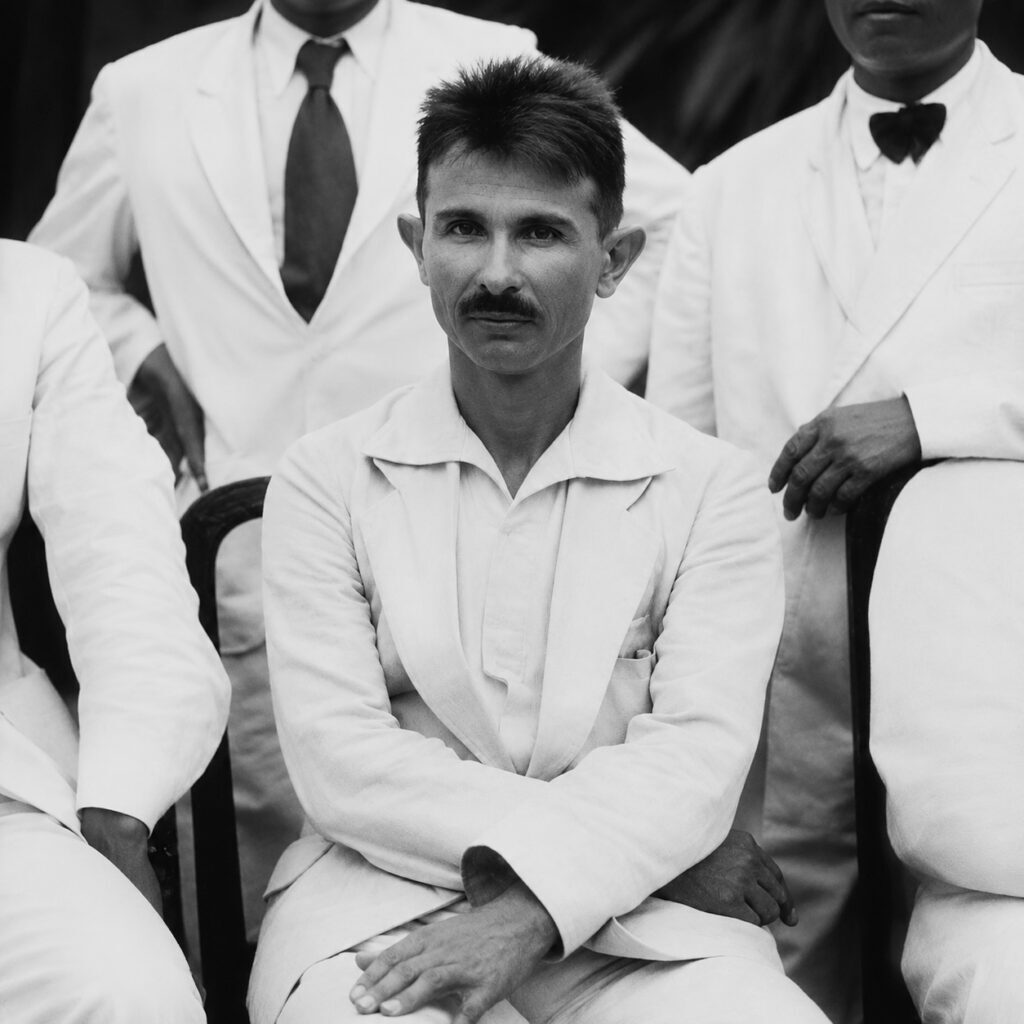
Joseph Inguimberty (France, 1896-1971), towards 1930.

Alix Aymé in her Hanoi studio, around 1932

Alix Aymé polishing a lacquer panel in her Paris studio, around 1950

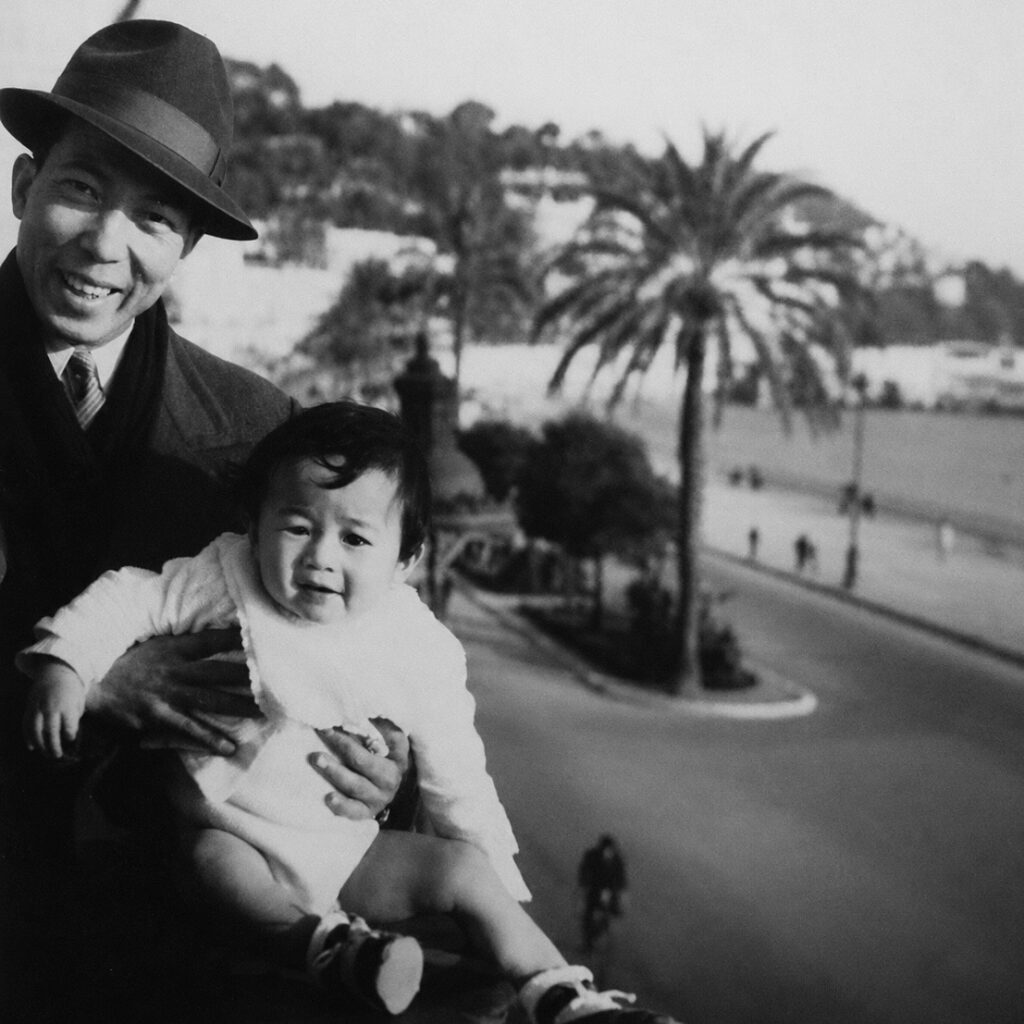
Mai Trung Thu and Ngo Manh Duc, Nice, 1942

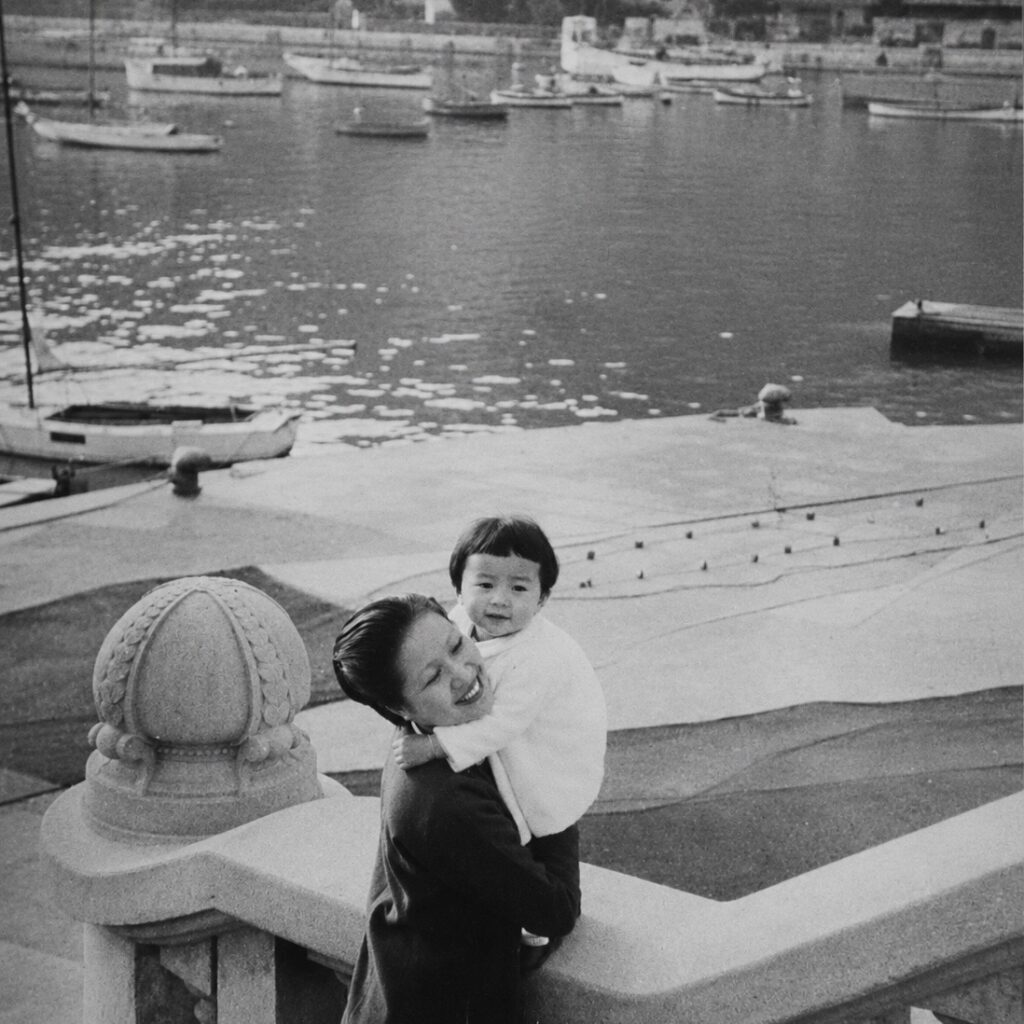
Le Thi Luu and her son Ngo Manh Duc, Monaco, 1942

Portrait of Empress Nam Phuong (1913–1963), the last Empress of the Nguyễn Dynasty, was executed in Hue on 24 March 1934 by the French painter-traveller Léa Lafugie, on the occasion of the enthronement ceremony of the Empress according to the imperial decree conferring the title of Empress Nam Phuong.

The work was previously presented at Drouot Paris @drouot_paris | Boisgirard-Antonini, Arts de l’Asie et de l’Orient, on 14 June 2019 (lot 336).

LÉA LAFUGIE (1880–1972)
Portrait of Empress Nam Phuong (1913–1963), on the Day of her Enthronement, Hué, 24 March 1934
signed (lower right); inscribed and dated ‘Hué, 24 mars 1934’ (lower right)
ink, colours and white gouache on paper
46.5 × 31 cm. (18¼ × 12¼ in.)
on the seal of the artist

Drouot Paris | Boisgirard-Antonini, Paris, Arts de l’Asie et de l’Orient, 14 June 2019, lot 336.

VINH PHOI (1937-2017)
Le temple (The Temple)
signed 'Vinh Phoi' (lower right)
gouache on paper
69.4 x 50.3 cm. (27 3/8 x 19 3/4 in.)
Executed in 1998
one seal of the artist

Nguyen Tuong LanPublicationSalonSalon Unique 1943

Post navigation

PreviousPrevious post:Previous Post
Next Next post:Next Post
© THUCDOAN'S 2026
  • Home
  • Biography
  • Photography
  • Archive
  • Instagram
  • VI
VI